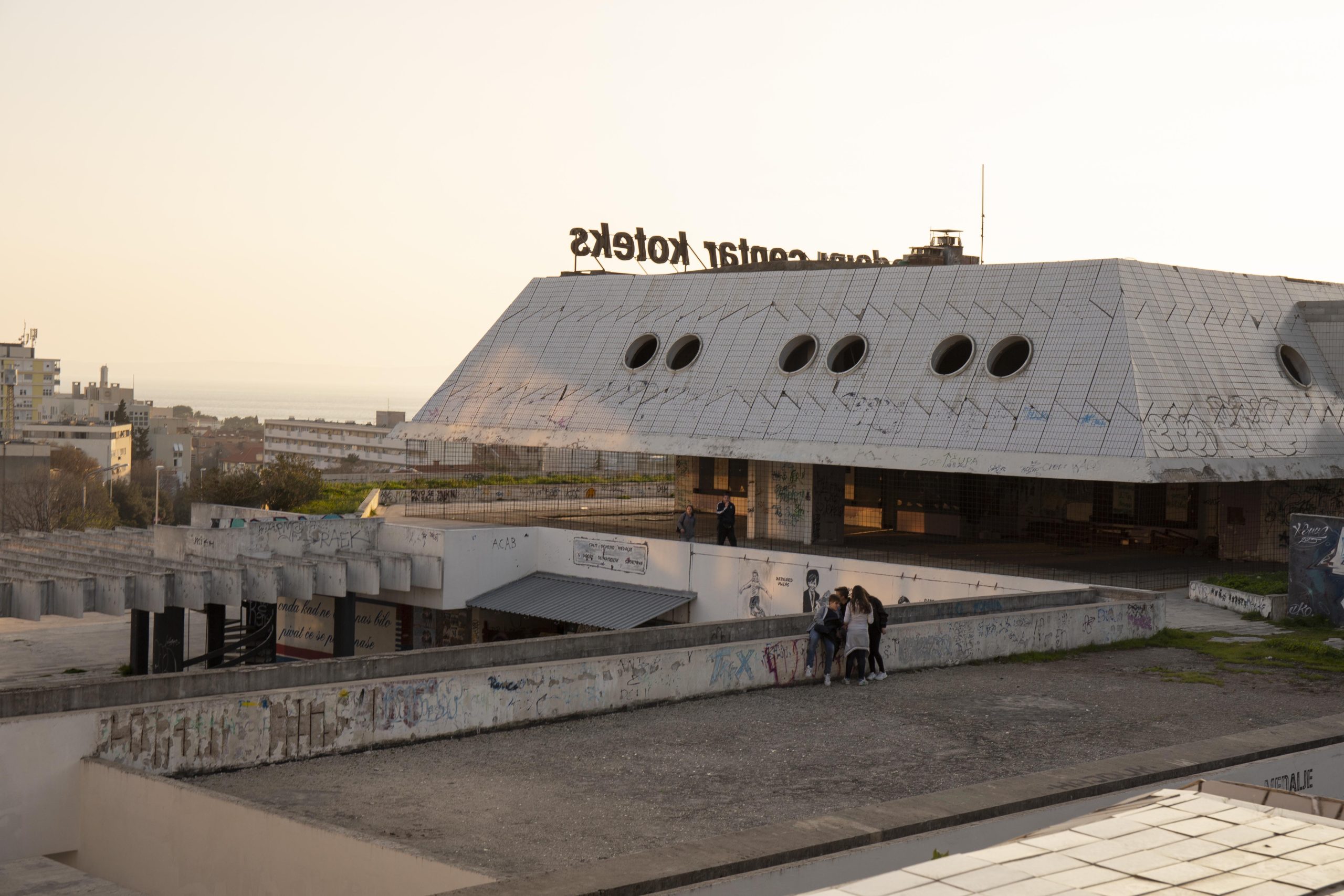
dvokanalni video, 2017. // two-channel video video, 2017
(…) “Mogli bismo reći da je sportsko prodajni centar Koteks zadnji veliki modernistički projekt u Splitu, i ilustracija svih procesa koji su oblikovali hrvatsko društvo devedesetih. Djelomično je devastiran, zapušten i raspodijeljen na desetak i više različitih katastarskih jedinica i vlasnika. Ipak, sportski dio kompleksa i dalje je ključni sportski objekt u gradu. „Ovdje ne možeš naći termin za trening“, govore.
U Splitu radim sa sportašima, trenerima, rekreativcima, studentima kineziologije i djecom, pokušavam vidjeti što poludevastirani sportski modernistički kompleks znači u gradu koji ima epitet sportskog središta.” (…)
Rad Korak za Koteks produciran je u sklopu programa Istok je zapadno od Zapada, projekta Motel Trogir, udruge Slobodne veze uz podršku BJCEM, Mediterranea 18.
U varijacijama postava, instalacija sadržava i dokumentaciju propadanja kompleksa.
(…) “We could say that the sports and sales center Koteks is the last big, modernist project in Split, and that it is an example of all the processes that have shaped Croatian society in the ’90s. It is partially devastated, neglected and divided into more than ten cadastral parcels owned by many. But, the part of the complex used for sports is still the main sports object in the city. “You can’t find time slots to organize trainings here“, they say.
In Split I work with professional athletes and amateurs, trainers, students at the Faculty of Kinesiology and children, trying to see what the half-devastated, modernist sports complex represents in a city famed as a sports center.” (…)
A Step Koteks was produced within the program The East is West of the West, of the Motel Trogir project, with the support of BJCEM- Mediterranea 18.
In its various iterations, the installation also incorporates documentation of the complex’s decay.
„Split je najsportskiji grad na svijetu“, reći će vam. „Grad s najvećim brojem osvojenih olimpijskih medalja u odnosu na broj stanovnika“. Vidi se to po velikim navijačkim muralima što zauzimaju gotovo svaku slobodnu površinu ili portretima svjetski poznatih sportaša rođenih u gradu.
Vidi se po još nečemu, kazat će drugi. Vidi se po korupcijskim aferama što se provlače kroz institucionalizirani sport. Reći će vam kako se u tome ogleda čitav ideološki sklop suvremenog hrvatskog društva: nacionalizam, revizionizam, prevaga privatnih nad javnim interesom, netrpeljivost prema drugačijem. Sport je mainstream, a mainstream u postsocijalističkom društvu ograđuje se, bez rezerve, od prethodnog razdoblja, negirajući sve pozitivno što smo iz njega mogli baštiniti.
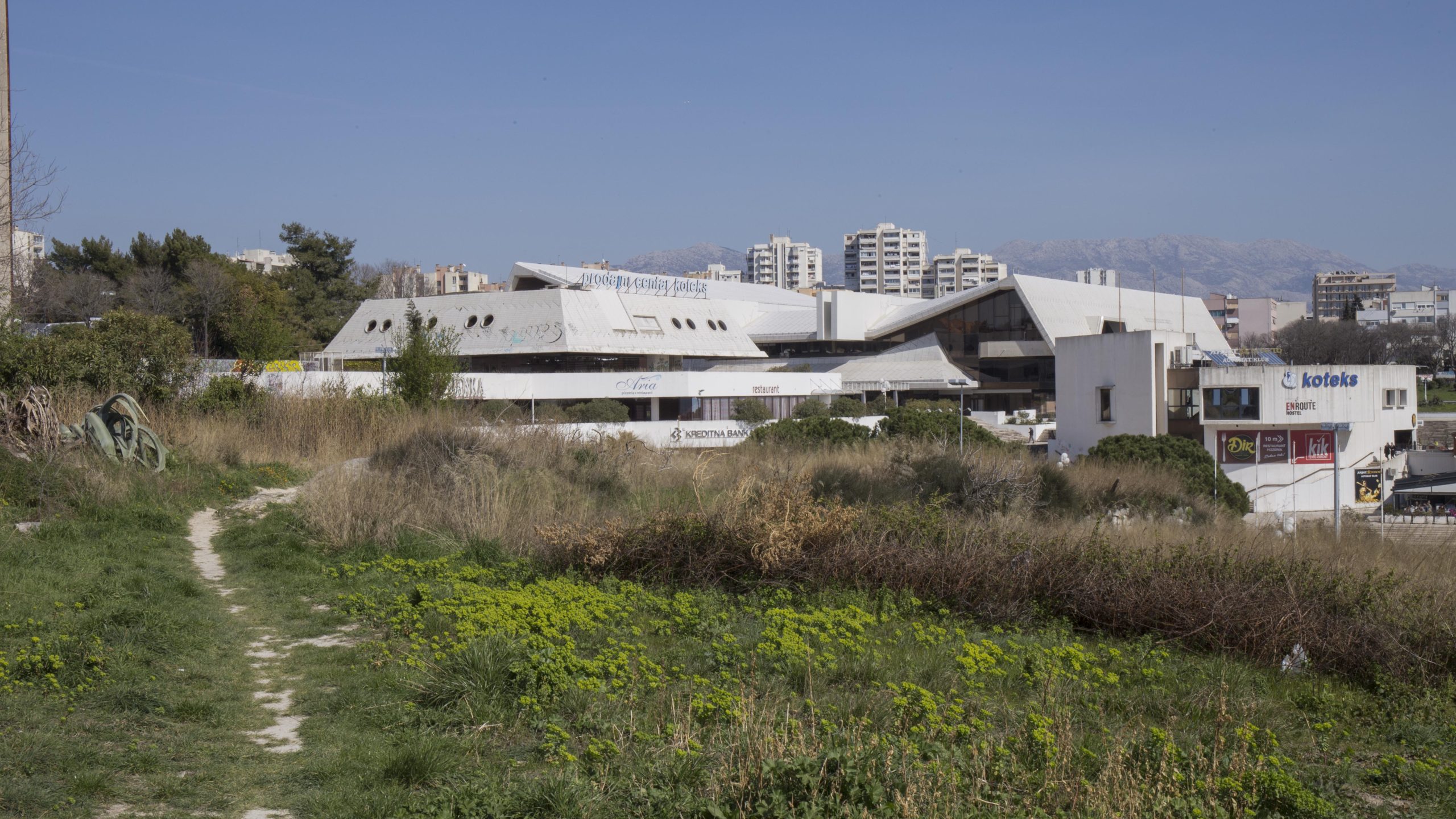
Mogli bismo reći da je sportsko prodajni centar Koteks zadnji veliki modernistički projekt u Splitu, i ilustracija svih procesa koji su oblikovali hrvatsko društvo devedesetih. Djelomično je devastiran, zapušten i raspodijeljen na desetak i više različitih katastarskih jedinica i vlasnika. Ipak, sportski dio kompleksa i dalje je ključni sportski objekt u gradu. „Ovdje ne možeš naći termin za trening“, govore.
U Splitu radim sa sportašima, trenerima, rekreativcima, studentima kineziologije i djecom, pokušavam vidjeti što poludevastirani sportski modernistički kompleks znači u gradu koji ima epitet sportskog središta.
„Koteks je nekad bio glavna stvar“, govore mi. Podsjeća ih na odlaske u slastičarnicu nakon treninga, igru i penjanje po glatkim geometrijskim površinama arhitekture kompleksa, provođenje vremena na skalinadama, na zlatno doba splitskog sporta.
„Koteks meni znači egzistenciju“, govori mi jedna od trenerica, „držim treninge dvaput dnevno. Samo, treba srediti infrastrukturu, znaš kako je to u našoj državi.“
Pokušavajući objasniti projekt na kojemu radim jednome od zaposlenika privatnog rekreacijskog centra, dok sjedimo u predvorju, pitam ga što njemu predstavlja Koteks. „Djetinjstvo, u prvom redu“, odgovori s nostalgijom koje kao da se malo srami, a onda nadoda kako ga treba rušit i gradit nanovo. „To je bilo ono vrijeme“, kaže, i po tonu glasa prepoznajem njegov stav.
Nakon što neko vrijeme sjedimo, prekine tišinu pitanjem: „Recite mi, što se struke tiče, ta arhitektura, je l’ to uopće čemu?“
“Split is the sportiest city in the world”, the saying goes. “The city with the highest number of Olympic gold medals per capita.” You can see it in the sports murals fans made on almost every available space in the city or the portraits of famous athletes who were born in the city.
You can see it in other things, some will say. In the corruption scandals plaguing professional sport. They will tell you it reflects the whole ideological framework of Croatian society: nationalism, revisionism, emphasizing private over public interest, intolerance towards everything and everyone who is different. Sport is mainstream, and mainstream in a post-socialist society completely distances itself form the period preceding it, negating all the positive aspects we inherited.
We could say that the sports and sales center Koteks is the last big, modernist project in Split, and that it is an example of all the processes that have shaped Croatian society in the ’90s. It is partially devastated, neglected and divided into more than ten cadastral parcels owned by many. But, the part of the complex used for sports is still the main sports object in the city. “You can’t find time slots to organize trainings here“, they say.
In Split I work with professional athletes and amateurs, trainers, students at the Faculty of Kinesiology and children, trying to see what the half-devastated, modernist sports complex represents in a city famed as a sports center.
“Koteks used to be the main deal“, they tell me. It reminds them of going to the ice-cream shop after training, of playing games and climbing the smooth, geometrical surfaces of the complex architecture, spending time on the stairs, of the golden age of sport in Split.
“Koteks is my livelihood“, one of the trainers tells me. “I train people two times a day. It’s just that the infrastructure should be fixed. You know how it goes in Croatia.”
Trying to explain the project I’m working on to one of the employees of a private recreation center while we are sitting in the lobby, I ask him what Koteks represents to him. “Childhood, primarily“, he replies nostalgically, as if a bit ashamed, then adding that it should be demolished and rebuilt. “It was a different time”, he says, and his opinion is obvious from the tone of his voice. After we have been sitting in silence for some time, he asks “Tell me, this architecture, what do the experts say, is it any good?”